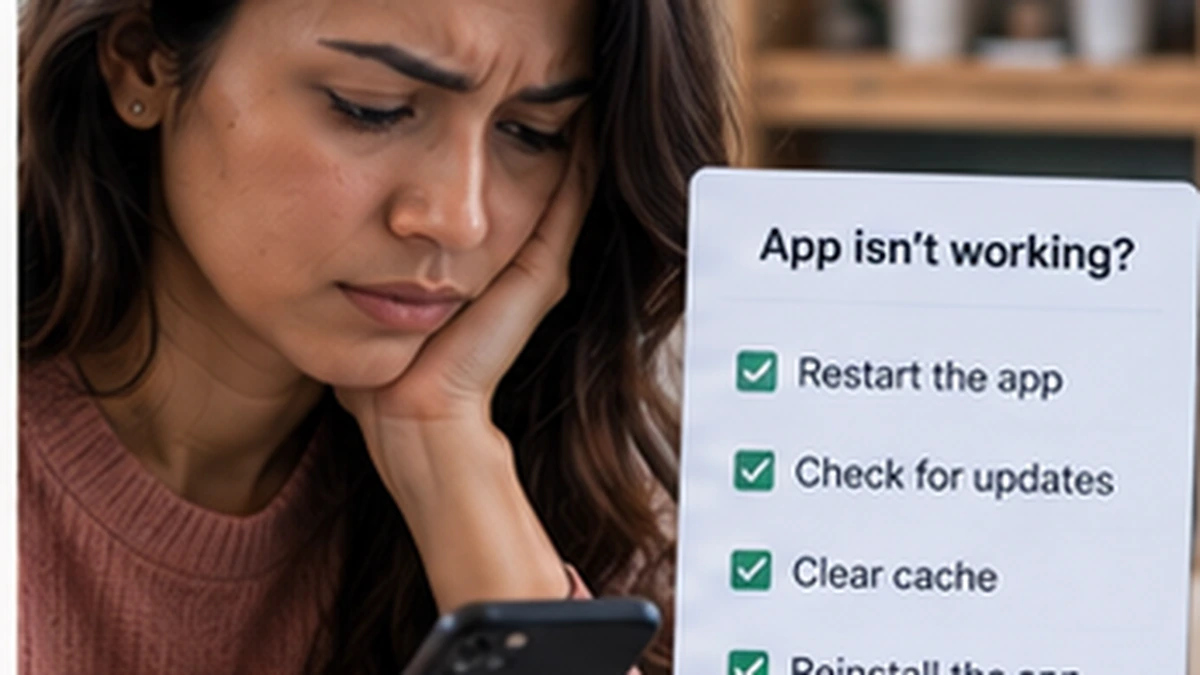
Fix an app that is not working is easier to manage when mobile apps are treated as accounts, permissions, data, subscriptions, and software rather than as simple icons on a phone. A small app decision can affect privacy, billing, recovery, and device security, so it helps to review the full setup.
This guide explains fix an app that is not working in practical terms using current Android and Google Play guidance. iPhone and iPad users should follow the equivalent Apple settings and App Store documentation because menu names and platform behavior differ.
Define the symptom
Note whether the app crashes, freezes, will not open, cannot sign in, cannot sync, or fails on one feature. For fix an app that is not working, this point matters because app behavior is often spread across device settings, store settings, and the account inside the app. Record which layer controls the feature before you change it.
App review step 1: connect this section to one real app. Write down the app name, publisher, account, permission, subscription, backup state, or setting involved. This creates a record you can verify later instead of relying on memory. App review note 10 for fix an app that is not working.
Restart the app
Close or force stop the app and open it again before changing more settings. For fix an app that is not working, this point matters because app behavior is often spread across device settings, store settings, and the account inside the app. Record which layer controls the feature before you change it.
App review step 2: connect this section to one real app. Write down the app name, publisher, account, permission, subscription, backup state, or setting involved. This creates a record you can verify later instead of relying on memory. App review note 10 for fix an app that is not working.
Restart the phone
A restart clears temporary processes and can resolve memory or background-service problems. For fix an app that is not working, this point matters because app behavior is often spread across device settings, store settings, and the account inside the app. Record which layer controls the feature before you change it.
App review step 3: connect this section to one real app. Write down the app name, publisher, account, permission, subscription, backup state, or setting involved. This creates a record you can verify later instead of relying on memory. App review note 10 for fix an app that is not working.
Update the app
Google recommends checking for app updates during troubleshooting. For fix an app that is not working, this point matters because app behavior is often spread across device settings, store settings, and the account inside the app. Record which layer controls the feature before you change it.
App review step 4: connect this section to one real app. Write down the app name, publisher, account, permission, subscription, backup state, or setting involved. This creates a record you can verify later instead of relying on memory. App review note 10 for fix an app that is not working.
Update Android
A newer app may depend on current system components or security updates. For fix an app that is not working, this point matters because app behavior is often spread across device settings, store settings, and the account inside the app. Record which layer controls the feature before you change it.
App review step 5: connect this section to one real app. Write down the app name, publisher, account, permission, subscription, backup state, or setting involved. This creates a record you can verify later instead of relying on memory. App review note 10 for fix an app that is not working.
Check available storage
Low storage can interfere with downloads, updates, caching, and normal operation. For fix an app that is not working, this point matters because app behavior is often spread across device settings, store settings, and the account inside the app. Record which layer controls the feature before you change it.
App review step 6: connect this section to one real app. Write down the app name, publisher, account, permission, subscription, backup state, or setting involved. This creates a record you can verify later instead of relying on memory. App review note 10 for fix an app that is not working.
Clear cache
Android says cache is temporary data and can be cleared without the same effect as clearing all storage. For fix an app that is not working, this point matters because app behavior is often spread across device settings, store settings, and the account inside the app. Record which layer controls the feature before you change it.
App review step 7: connect this section to one real app. Write down the app name, publisher, account, permission, subscription, backup state, or setting involved. This creates a record you can verify later instead of relying on memory. App review note 10 for fix an app that is not working.
Clear storage only after protecting data
Clearing storage permanently removes local app data. For fix an app that is not working, this point matters because app behavior is often spread across device settings, store settings, and the account inside the app. Record which layer controls the feature before you change it.
App review step 8: connect this section to one real app. Write down the app name, publisher, account, permission, subscription, backup state, or setting involved. This creates a record you can verify later instead of relying on memory. App review note 10 for fix an app that is not working.
Reinstall when necessary
A reinstall can replace damaged app files, but local data may be erased. For fix an app that is not working, this point matters because app behavior is often spread across device settings, store settings, and the account inside the app. Record which layer controls the feature before you change it.
App review step 9: connect this section to one real app. Write down the app name, publisher, account, permission, subscription, backup state, or setting involved. This creates a record you can verify later instead of relying on memory. App review note 10 for fix an app that is not working.
Contact the developer when the issue is isolated
Google recommends contacting the developer when other apps work and normal troubleshooting fails. For fix an app that is not working, this point matters because app behavior is often spread across device settings, store settings, and the account inside the app. Record which layer controls the feature before you change it.
App review step 10: connect this section to one real app. Write down the app name, publisher, account, permission, subscription, backup state, or setting involved. This creates a record you can verify later instead of relying on memory. App review note 10 for fix an app that is not working.
A deeper review for fix an app that is not working
Think about four layers separately: the app package, the store account that installed or purchased it, the online account used inside the app, and the data stored locally or in the cloud. Problems become easier to diagnose when you know which layer is actually failing. App review note 10 for fix an app that is not working.
Also decide what would be costly to lose. For fix an app that is not working, that might be photos, messages, notes, purchases, subscription access, authentication, or local files. Protect the most important dependency before making a major change.
A realistic app-management example
A user notices an app asking for new access or behaving differently after an update. Instead of approving every prompt or deleting the app immediately, the user checks the publisher, permissions, privacy information, account recovery, backup status, and update history. The final decision is clearer because fix an app that is not working is based on evidence rather than habit.
Connect this guide to the rest of the app site
Read update mobile apps for one related app-management topic, and use manage app storage and cache when the second guide helps you protect privacy, accounts, data, or app stability.
These internal links connect the first App batch so readers can move between permissions, privacy, subscriptions, security, backup, installation, updates, storage, and troubleshooting without repeating the same article.
A seven-day review plan for fix an app that is not working
Day 1: choose one important app. Day 2: record its publisher and store account. Day 3: review permissions and privacy information. Day 4: check subscription or purchase status. Day 5: verify backup and recovery methods. Day 6: update or troubleshoot only one change at a time. Day 7: write a short checklist you can reuse for another app. App review note 10 for fix an app that is not working.
The seven-day structure is only a framework. A simple permission review can take minutes, while a lost account or device migration can require more time and support from the app provider.
Practical checklist
- Purpose of fix an app that is not working identified
- App publisher verified
- Permissions reviewed
- Privacy information checked
- Subscription account confirmed
- Recovery methods updated
- Backup status checked
- Update and troubleshooting path understood
Use the checklist to find the weakest part of your understanding of fix an app that is not working. One missing recovery method, forgotten subscription, unnecessary permission, or unbacked-up file can matter more than several settings you already understand.
Frequently Asked Questions
Does deleting an app cancel its subscription?
Not necessarily. Google Play explicitly states that uninstalling an app does not cancel the subscription. Subscription management is a separate billing action.
Does clearing app cache delete everything?
On Android, clearing cache removes temporary data. Clearing storage is much more destructive because it removes local app data.
Is every app from outside an official store dangerous?
No, but unknown-source installation carries more risk because the package and update channel require additional verification.
Should I allow every permission so the app works correctly?
No. Grant the access needed for features you actually use and review whether a narrower permission option is available.
Practical review 1 for fix an app that is not working
Open one real app and explain how it is installed, which account owns it, which permissions it has, where its important data is stored, and how you would regain access after losing the phone. If any answer is unclear, resolve that gap before making a major change. App review note 28 for fix an app that is not working.
Then compare the current setup with one safer alternative, such as a narrower permission, a verified backup, a stronger sign-in method, or removal of an unused subscription. The goal is not to make the phone complicated; it is to make important apps easier to recover and trust. App review note 28 for fix an app that is not working.
Practical review 2 for fix an app that is not working
Open one real app and explain how it is installed, which account owns it, which permissions it has, where its important data is stored, and how you would regain access after losing the phone. If any answer is unclear, resolve that gap before making a major change. App review note 29 for fix an app that is not working.
Then compare the current setup with one safer alternative, such as a narrower permission, a verified backup, a stronger sign-in method, or removal of an unused subscription. The goal is not to make the phone complicated; it is to make important apps easier to recover and trust. App review note 29 for fix an app that is not working.
Authoritative resource to review
For an authoritative reference related to this topic, review Android Help – Fix an Installed Android App That Is Not Working. Use the source for the general platform principle, then follow the documentation for your exact phone, operating-system version, and app.
Final perspective
Fix an app that is not working becomes easier when you know which account, permission, data store, subscription, and recovery method belongs to the app. Verify first, back up important data, make one change at a time, and keep a recovery path before deleting or resetting anything.